Problem
A CMDB without business context is “just for techies.” To understand business impact and the promises made to consumers, technical services must be connected to what the business actually consumes, and the Business Service Offering is where that connection happens.
In practice, offerings are often created once and then left to drift. Ownership is unclear or points to people who have left, offerings are not linked to the technical instances that deliver them, and the request catalog lives its own life separate from the CMDB. CSDM 5 adds further change: Application Services are now one type of the broader Service Instance, and offerings can be classified through a dedicated product model. Without a clear target model, it becomes hard to:
- Know which offerings are live, who owns them and who manages them day to day.
- Trace an incident or change from a technical service instance to the business offering it affects.
- Keep the request catalog aligned with the services that are actually operated.
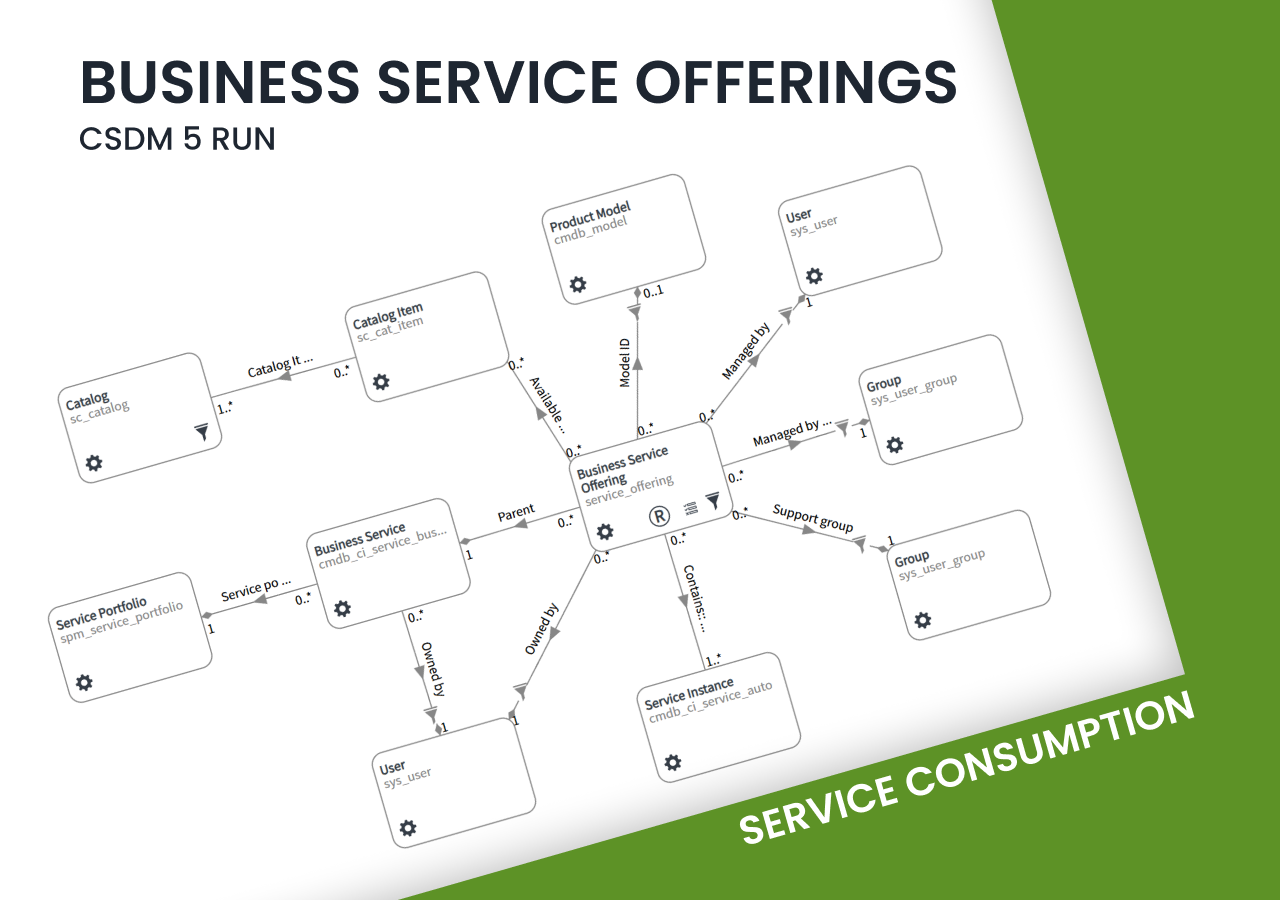
This blueprint defines the Run-stage target for Business Service Offerings in line with CSDM 5, so every offering has its business, technical, catalog and ownership relationships in place.
What the Blueprint Includes
This CSDM 5 Run stage blueprint includes the following entities:
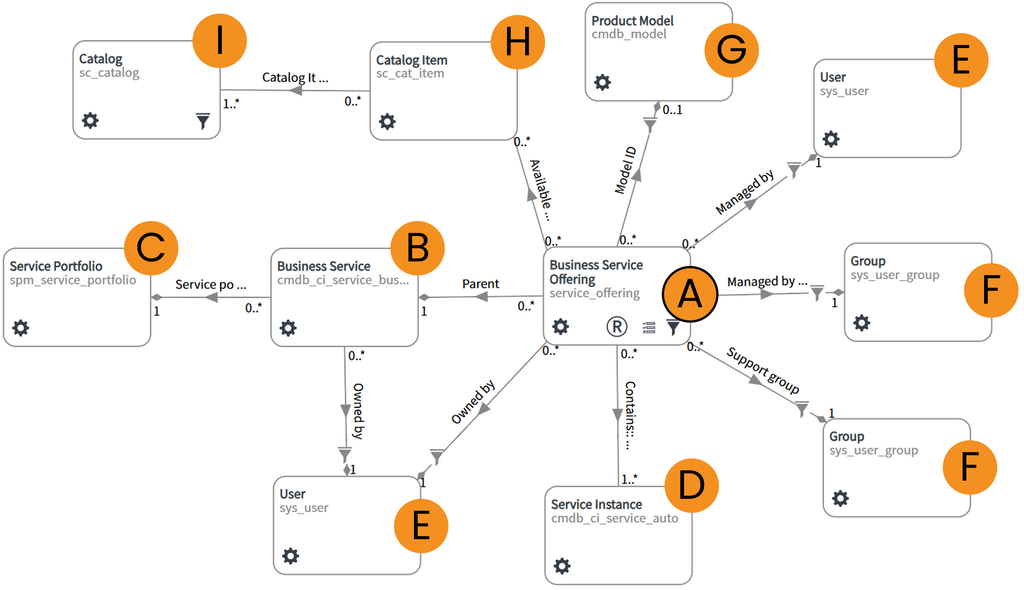
- Business Service Offering (root) – the consumable variant of a business service, such as a service level, tier or audience. Only offerings classified as business service offerings are in scope.
- Business Service – the service the offering belongs to. Every offering has exactly one parent business service, and the business service has its own owner.
- Service Portfolio – groups and categorizes services for visibility and lifecycle management.
- Service Instance – the technical instances that deliver the offering, known as Application Services before CSDM 5. Every offering must contain at least one service instance.
- User – active users accountable for the model: the owner and the manager of the offering, and the owner of the business service.
- Group – active groups that manage and support the offering, used for ownership routing and for assigning incidents and requests.
- Product Model – an optional service offering model that classifies the offering as a product, new in this CSDM 5 version of the blueprint.
- Catalog Item – the requestable items made available to the offering’s subscribers.
- Catalog – the active catalogs where those catalog items are published. Each catalog item belongs to at least one catalog.
Considerations
- Business offerings only. The blueprint is filtered to offerings classified as business service offerings. Technology Management Service Offerings follow their own model and blueprint.
- From Application Service to Service Instance. In CSDM 5, the Application Service is one type of Service Instance alongside newer types such as data, network and facility service instances. Decide which instance types are in scope for your offerings and review existing relationships when you migrate from the CSDM 4 model.
- Owner and Manager are different roles. This version requires both an owner and a manager for each offering. Agree on the difference, for example accountability for the offering versus day-to-day management, and make sure both point to active people.
- Prepare to maintain product models. The product model reference is optional, but once you start using service offering models you need a way to create, review and retire them alongside the offerings they classify.
- Review responsibilities against your operating model. Managed by and support groups should reflect who actually manages and supports the offering. Extend the blueprint with approval or change groups if your processes use them.
- Keep the catalog in sync. Catalog items linked to an offering should sit in active catalogs, and should be retired together with the offering.
- Basic offering data matters too. Name, description, life cycle stage status, service classification and business criticality should be maintained on each offering for reporting and impact analysis to work.
Benefits
- Clear accountability – every offering has a named owner, manager, managing group and support group.
- End-to-end impact analysis – incidents and changes on service instances can be traced to the business offerings and services they affect.
- A consistent request catalog – catalog items are tied to live offerings and published in active catalogs.
- CSDM 5 alignment – the model follows the Service Instance terminology and supports the new service offering product model.
- Readiness for the Fly stage – complete offering data is the foundation for portfolio management, service reporting and AI-driven service operations.
Related Information
Check other templates related to the Service Consumption.
How to Get This Blueprint?
If you’re already a Data Content Manager Customer, you can download the Blueprint from the Knowledge Base. You will need your login credentials to access the blueprint download page.